


Table of Contents
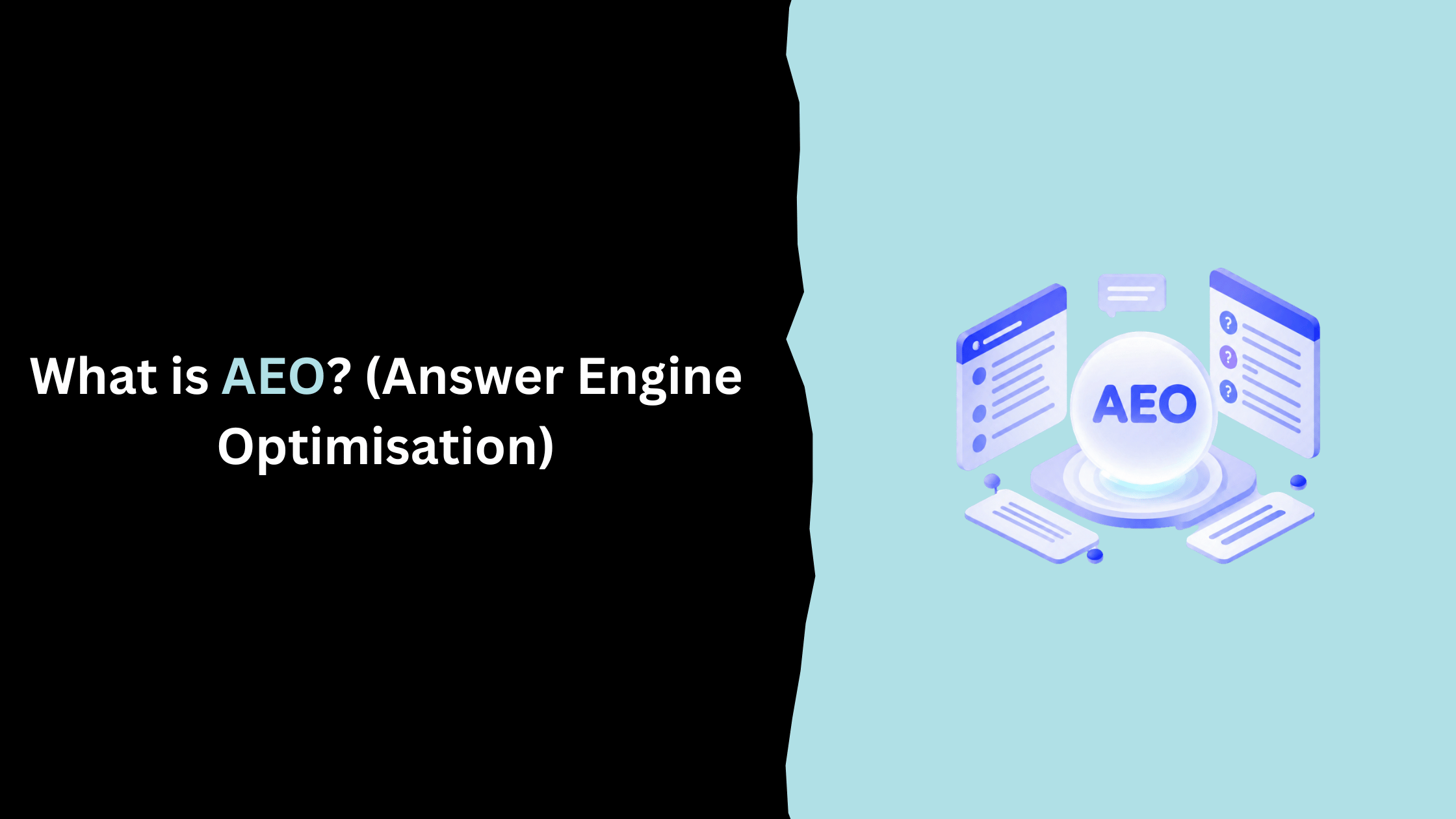
AEO, short for answer engine optimisation, is the practice of making your content easy for AI systems to find, understand and cite, so your brand is the answer people see rather than one link in a list. It covers Google AI Overviews, ChatGPT, Perplexity and voice assistants.
Google's own advice is that optimising for AI features is still SEO, and for most sites that's right. Even so, answer engine optimisation has enough habits, measurement problems and shaky advice of its own to be worth explaining properly. So what is AEO in practice, and is it worth your time? This guide covers how it differs from traditional SEO and GEO, what Google says you can skip, why it matters in the UK, and how to start and measure it.
What does AEO stand for?
What is AEO in short? In search and digital marketing, it stands for answer engine optimisation. The name describes the goal: being the answer rather than one link among ten. You'll also see the same idea called GEO or AI search optimisation, and the comparison later in this guide sorts out how those terms overlap.
How does answer engine optimisation work?
An answer engine is any system that replies to a question with a written answer instead of a list of links. Answer engine optimisation is the work of making your pages the source those answers draw on.
Which answer engines and surfaces count
The list of AI answer engines is wider than most people expect. On Google it includes AI Overviews, which sit above the organic results, and AI Mode, Google's conversational search experience. Elsewhere it includes AI tools such as ChatGPT, Perplexity, Microsoft Copilot and Meta AI, plus voice assistants and featured snippets, which are the older versions of the same idea. Each of these AI platforms chooses sources its own way, and the same question can produce different AI-generated responses from one day to the next.
Early AEO meant winning a single featured snippet or voice result. The target is wider now: being named, quoted or linked inside AI-generated answers. Success is counted in mentions and AI citations, not positions.
How retrieval and citation work in plain English
Google says its AI features use retrieval-augmented generation and a technique it calls query fan-out. In plain terms, the system splits a question into smaller questions, pulls matching passages from the Search index and writes an AI-generated response from what it finds. A page can only be quoted if it's indexed, readable and answers one of those smaller questions clearly, so a page that covers only the headline query can miss the passages that get used.
AI tools that search the web work in a similar way. When an AI assistant answers from training alone, there's no page to cite, which is why you can't rank in ChatGPT the way you rank in Google. Your content can still shape what AI models say about your brand, but not in a way you can predict or control.
AEO vs SEO vs GEO
SEO, short for search engine optimisation, earns a ranked link and, with luck, a click. AEO aims to get your content selected as the answer. GEO, generative engine optimisation, is the label some people use for the same job aimed at generative engines such as ChatGPT. The terms overlap heavily, with AEO leaning towards short, direct answers and GEO towards longer, synthesised explanations.
We treat them as one job with different surfaces. The practical question isn't what to call it. It's which questions your customers ask, and whether the answers they get name you.
Is AEO part of SEO?
Mostly, yes. Google says its generative AI features rely on its core ranking and quality systems, so the foundations are the same: crawlable, indexable pages, a clear site structure and helpful content. That's technical SEO plus good writing. AEO adds attention to how a passage reads when it's lifted out on its own, and to the places beyond your site where AI engines pick up descriptions of your brand.
Will AEO replace SEO?
No. Search engine optimisation still feeds the answer engines, because Google's AI features pull from the Search index and a page that isn't indexed or ranked well has less chance of being retrieved. What changes is what a ranking is worth. With more searches ending without a click, a first-page position delivers less traffic than it used to, and being named in the answer becomes a second goal beside it.
What Google says about optimising for AI features
Google published its first official guide to optimising for generative AI features in Search on 15 May 2026 and last updated it on 10 July 2026. It takes a firm line on several popular tactics. The table sets the common advice next to what Google says.
The guide's own advice is short. Make original, non-commodity content with first-hand or expert insight, keep pages crawlable and indexable, use Merchant Center and Google Business Profile for product and local visibility, and watch the generative AI performance report in Search Console.
Two cautions. The guide covers Google's features only. Other AI engines such as ChatGPT, Perplexity and Copilot are separate products with their own retrieval, and Google doesn't speak for them. Google also tells site owners to check third-party AEO and GEO advice against its guide, so it's worth doing the same with any checklist you're handed, this one included.
Why AEO matters for UK businesses
Start with clicks. SparkToro's analysis of Similarweb data found that 69.5% of UK Google searches between January and April 2026 ended without a click, the highest of the six countries it compared, with 232 clicks per 1,000 searches reaching the open web. I'd treat that headline with some suspicion. Zero-click studies use different panels and definitions, and some put the rate far lower. In SparkToro's method a search is zero-click if nothing is clicked, which includes people who simply try another query, so the figure can overstate how often the answer alone was enough.
Even allowing for that, the direction is clear. Some of the people who used to click now read AI summaries on Google, or ask one of the AI platforms instead, and the brands named in those generated answers get the attention. That's what AI visibility means: how often and how accurately your brand appears in AI answers for the questions your customers ask. It's separate from rankings. A site can sit in the top three for a commercial keyword while Google AI Overviews answers the question above it and clicks fall. We've seen exactly that with a retail client.
Check how much AI referral traffic your own site gets before deciding how much to invest. For some businesses it's still a rounding error, and for others it's already a channel.
How to get started with AEO
None of this needs a new tool, and most AEO strategies start with the same five steps. The first four are ordinary SEO hygiene.
1. Check that crawlers can reach your pages
If Google can't crawl and index a page, it can't be retrieved for an AI answer. Open Search Console and confirm your important pages are indexed. Then check robots.txt and any bot-protection rules at your host or CDN. Some sites block AI crawlers and AI agents by accident, and some block them on purpose, which is a fair choice as long as it's deliberate.
2. Put the answer first
Open each section with a direct answer of roughly 40 to 60 words, then add the detail. It works because a passage lifted out of context still makes sense. Write clear answers to the questions customers really ask, in the words they use. I'd start with the questions your sales team hears most often.
3. Add something nobody else has
Google's guide recommends original, non-commodity content with first-hand or expert insight. If your page restates what ten others already say, an AI summary can do that without you. Add your own data, tested results, photographs, pricing or named expertise. That's what we mean by information gain in SEO: the angles your competitors skip.
4. Use schema markup where it fits
Structured data helps search engines read what a page is about, and it can make pages eligible for rich results. Google's guide says schema isn't required for generative AI search and there's no special AI markup. So add structured data where it matches the content, such as Product, Article or Organization, and don't expect schema to work as an AEO switch. Make sure the markup matches what's visible on the page.
5. Be consistent about who you are
It helps both Google and other AI engines when your brand is described the same way everywhere. That's entity clarity: the same business name, descriptions and product details across your site, Google Business Profile, Merchant Center feeds and major listings. Then earn genuine mentions through reviews, press and useful contributions to forums. Google's guide says manufactured mentions don't help, and that part is easy to believe.
How to measure AEO
There's no single dashboard yet, so you combine three signals. The generative AI performance report in Search Console, which Google recommends, shows how your pages appear in its AI features. In GA4, look at referral sources for AI platforms such as chatgpt.com and perplexity.ai and group them together. Prompt sampling means running a fixed list of real customer questions each month through AI tools such as ChatGPT and Perplexity, plus AI Mode and Google AI Overviews, then recording whether you were named, cited with a link or absent.
Decide what AEO success looks like before you start. Named, cited, linked and clicked are four different outcomes, and your AEO targets should say which one you want for each question. An AI citation with a link can send visitors, while a bare mention builds awareness. Expect noise, too. AI-generated answers change between runs, so one screenshot proves very little. Tracking the same prompts monthly and watching the direction is more honest than celebrating a single appearance.
Our free AI Visibility Audit runs your brand through a set of AI discovery queries and shows where competitors get recommended and you don't. For clients, we also track AI Overview and AI Mode appearances with regular sets of conversational, purchase-focused queries.
Our test: Junior ISA content in ChatGPT
In our Junior ISA experiment, we built a standalone page on Junior ISAs for grandparents for our client The Children's ISA, using ordinary SEO practice: structured data, a clear meta title and description, and factual copy. Within a week the page appeared in ChatGPT's answer to a request for a guide on the topic. That's one query, one test and no control group, so it shows the approach can work, not that it will, and it can't tell you which part did the work. It does fit Google's view that the fundamentals still apply.
AEO FAQs
What does AEO stand for?
In marketing, AEO stands for answer engine optimisation. It means making content easy for AI systems and search features to select and cite as the answer, whether that's an AI Overview, a chat assistant or a voice result. The aim is to be the answer people see.
What is the difference between AEO and SEO?
SEO aims to rank a page and earn the click. AEO aims to get your content selected or cited as the answer in AI Overviews, chat assistants and voice results. They share foundations such as crawlable pages and helpful content, and Google treats optimising for AI features as still SEO.
Will AEO replace SEO?
No. Google's AI features draw on its Search index and ranking systems, so pages still need to be indexed and useful to be retrieved. What changes is the goal. With more searches ending without a click, ranking is no longer enough, and being named in the answer matters too.
Is AEO part of SEO?
Mostly. Google says optimising for generative AI search is still SEO, because its AI features rely on the same core ranking and quality systems. AEO adds attention to answer-first writing, original content and how your brand is described elsewhere. The technical foundations, such as crawlability and indexation, are identical.
Can ChatGPT do SEO?
On its own, ChatGPT can help with SEO tasks such as drafting outlines, summarising competitor pages and suggesting questions to answer. It can't see your rankings, crawl your site or replace data from Search Console. Treat it as an assistant for drafting and ideas, and check anything factual before it goes live.
If you want a read on how your own site shows up in AI answers, we're an AI SEO agency that combines traditional SEO with AI visibility work.
Related Post

Get in touch today
complete the form below for an informal chat about your business

We are a small, but perfectly formed, Digital Marketing Agency based in Stoke-on-Trent, Staffordshire. We provide services that help business owners make more money online.

