


Your Rankings Are Fine, So Why Is Your Traffic Falling?
AI Visbility and IGO Audit - SearchUp's proprietary audit

Table of Contents
We keep having a version of the same conversation with clients. The rank tracker looks healthy. Positions one to three for the money keywords. And yet clicks are down, quarter on quarter, and nobody can point to anything that broke.
We were also, frankly kind of bored about the SEO vs. GEO debate we constantly see on LinkedIn and wanted to see what was going on ourselves. We also said we we're going to do something about it, so we did.
Over the past year, we have watched this pattern repeat across our client base, from ecommerce brands to B2B building produts. One retail client ranks in the top three for their most commercially important keyword cluster. Historically that would have meant a reliable stream of clicks. Instead, an AI Overview now sits above their listing, answers the question in full, and a meaningful share of searchers never scroll past it. The ranking is intact, but the click isn’t there anymore. However, we know that people still search for stuff, its just that they now search everywhere.
Meanwhile, something else is happening at the other end of the funnel. When we dug into referral traffic for another client, we found a small but growing stream of visitors arriving from ChatGPT, Perplexity and Gemini. The volume was modest, but the conversions were there. These visitors arrive having already been told the answer, sometimes having already been told which brand to buy from. They are further along than almost any other traffic source.
Put those two findings together and you get the new reality of search: AI systems are increasingly deciding who gets seen, and most brands have no idea where they stand.
Visibility has quietly split in two
For twenty years, search visibility meant one thing. Rank well, get clicks. Every tool, every report and every KPI was built around that model.
That model now only describes part of the picture. Today, your brand has two kinds of visibility:
Classic visibility is your position in the traditional organic results. It still matters, and it still drives revenue, but the space it occupies on the results page keeps shrinking as AI Overviews, product carousels and other SERP features expand.
AI visibility is whether AI systems know who you are, trust what you say, and cite you when someone asks a question in your category. When a potential customer asks ChatGPT for the best product in your space, are you in the answer? When Google's AI Overview summarises your category, is it drawing on your content or your competitor's?
Here is the uncomfortable part. These two kinds of visibility do not track each other. We have audited brands with excellent rankings and almost no AI presence. Their content ranks, but it says nothing an AI cannot get from ten other sources, so it never gets cited. We have also seen smaller brands punch well above their weight in AI answers because their content contains genuinely original information: proprietary data, first-hand expertise, specific answers to specific questions.
Why you cannot see this in your existing reports
The frustrating thing about AI visibility is that the standard toolkit barely registers it.
Google Search Console will show you impressions and clicks, but it will not tell you that an AI Overview answered the query before anyone reached your listing. Your rank tracker will happily report position two while the click-through rate for position two quietly collapses. GA4 will bundle most LLM referrals into places you are not looking, and it will never show you the conversations where an AI recommended a competitor and the customer went straight to them.
The platforms are starting to catch up, slowly. Bing Webmaster Tools now surfaces data on how your content is being cited by LLMs, and it is genuinely getting better. But knowing you were cited three times last month is a measurement, not a strategy. None of these tools tell you why a competitor is cited when you are not, which gaps are costing you the most revenue, or what to actually change. You get a scoreboard with no playbook.
You can piece the rest together manually. We have spent months doing exactly that for clients: running structured queries across AI systems, logging citations, cross-referencing against search data, and mapping where brands appear and where they are invisible. It works, but it is slow, and it does not scale.
So we built something that does.
SearchUp Audits: two free tools for the new search landscape
We have taken the methodology we developed on client work and turned it into two automated audits. Both are free, and both give you your full results on screen, straight away. Measurement and the playbook, together.
The AI Visibility Audit analyses how discoverable your brand is to AI systems. Give it your domain, your business model and your competitors, and it runs your brand through a structured battery of AI discovery queries alongside a full analysis of your search footprint. You get back an AI Exposure Score, a citation gap analysis showing exactly where competitors are being recommended and you are not, and a 90-day growth plan with the specific fixes we would prioritise.

The IGO Audit goes deep on a single target query. IGO stands for Information Gain Optimisation, which is the discipline of making your content say something the rest of the results do not. The audit analyses what already ranks and gets cited for your query, surfaces the semantic gaps nobody is filling, and generates an entity-first content blueprint you can hand straight to a writer. It is the difference between publishing another article that describes the topic and publishing the article that AI systems draw their answers from.
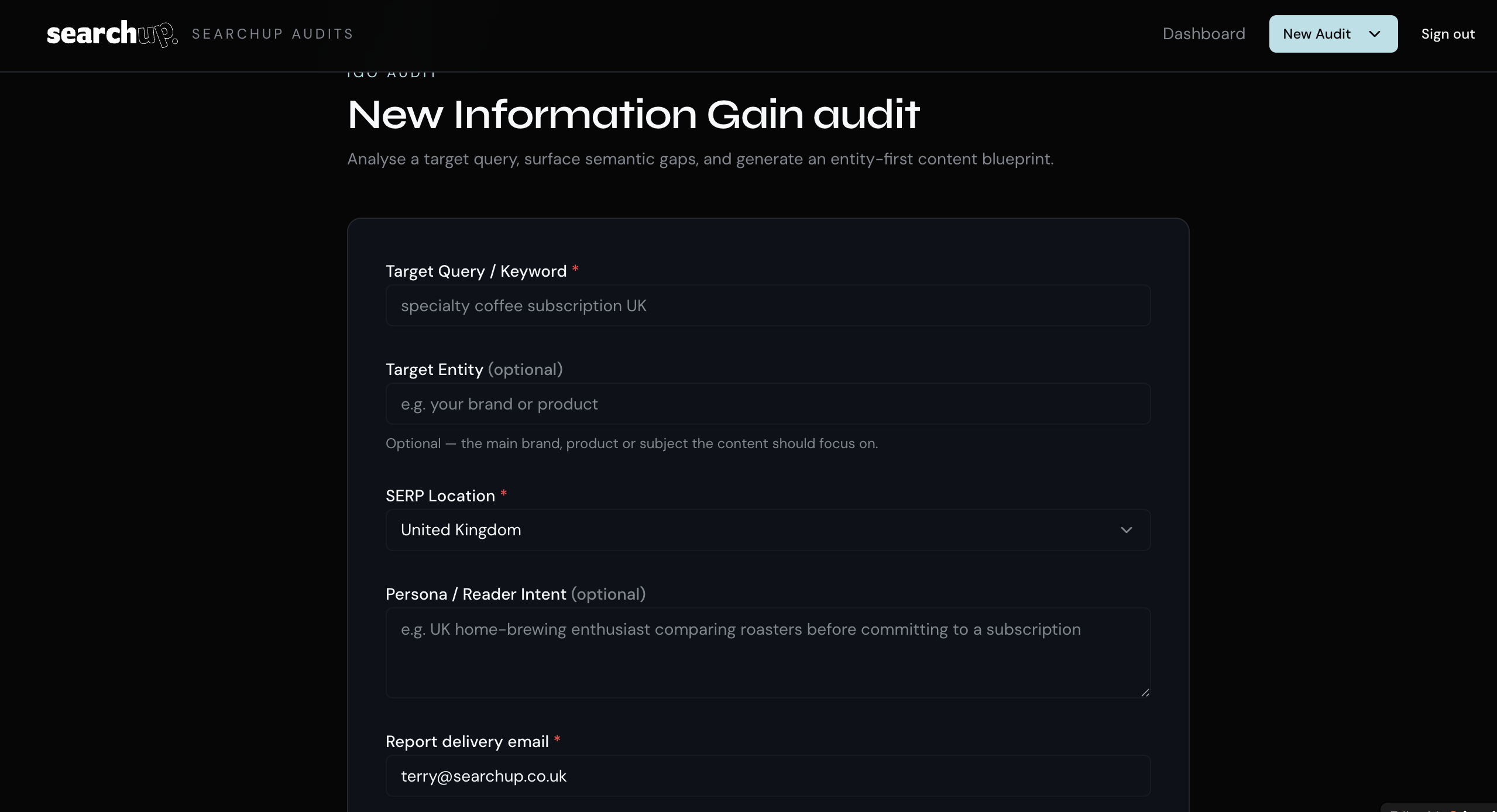
Use the first one to understand where you stand. Use the second one when you are ready to do something about a specific opportunity.
What the early audits are telling us
We have been running these against domains we know well, and a few patterns are already clear.
Most brands are invisible to AI for the queries that matter most to them. Not slightly under-represented. Invisible. The citations for commercial queries in most categories are dominated by a handful of publishers, comparison sites and whichever competitor got serious about this first.
The brands that do get cited share a trait: their content contains information that exists nowhere else. Original data, real product expertise, specific and direct answers. AI systems are, in a sense, the harshest content quality filter the industry has ever faced. Generic content that was good enough to rank is not good enough to be cited.
And the gap is still open. Very few brands in most UK categories are competing seriously for AI visibility yet. The ones that move now are establishing the entity authority and citation footprint that will be very difficult to displace later. This looks a lot like SEO did in the early days: a short window where effort is disproportionately rewarded.
Run yours
The audits go live next week. They are free, and there is no sales call required to see your results, though, of course if you need any help with implemenation we would love to have a conversation
Want to be in the first batch? Email info@searchup.co.uk with your domain and your top two or three competitors, and we will run your AI Visibility Audit the day the tool launches and send your results over personally.
Related Post

Get in touch today
complete the form below for an informal chat about your business

We are a small, but perfectly formed, Digital Marketing Agency based in Stoke-on-Trent, Staffordshire. We provide services that help business owners make more money online.

